A Smart Estate Plan for Your Treasure Coast Retirement
Key Takeaways: Most Treasure Coast retirees should consider seven Florida estate planning documents: a will, a revocable living trust, a durable power of attorney, a designation of health care surrogate, a living will, current beneficiary designations, and a plan for the Florida homestead. Florida law sets strict signing rules for wills and allows self-proved and electronic wills under certain conditions. A funded revocable trust can help avoid probate, especially for property in more than one state. Beneficiary designations generally control retirement accounts and life insurance outside your will, and Florida homestead rules may limit who can inherit your home if you leave a spouse or minor child. Common mistakes include relying on out-of-state documents, leaving trusts unfunded, keeping old beneficiary forms, and overlooking the surviving spouse’s 30% elective share. Florida has no state estate tax, but you should review your plan regularly.
Most Treasure Coast retirees should consider seven Florida estate planning documents: a will, a revocable living trust, a durable power of attorney, a designation of health care surrogate, a living will, current beneficiary designations, and a plan for the Florida homestead. You worked for decades to enjoy your life in Stuart, Jensen Beach, or Palm City. Now you want to protect the people you love and stay in control if your health changes. Each document covers gaps the others leave.
If you are ready to make a plan or update an old one, The Law Offices of Travis R. Walker, P.A. can help. Visit The Law Offices of Travis R. Walker, P.A. to learn more about our approach, call 772-708-0952, or schedule a consultation with our team today.
Why Retirees in Stuart and Martin County Need Florida-Specific Planning
Florida has its own rules for wills, homestead property, and spousal rights, and a plan drafted elsewhere may not fit them. Many Treasure Coast residents moved here from New York, New Jersey, Ohio, or Canada, and some still split the year between homes. Your domicile (permanent home) can affect which state’s tax and probate rules apply.
Florida does not have a state estate tax. Federal estate tax may still apply to larger estates above the federal exemption, which can change. Property in another state may also face that state’s estate or inheritance tax. Have an attorney review your situation.
The 7 Florida Estate Planning Documents Every Retiree Should Consider
These documents fall into three groups: those that transfer property, those that handle your affairs if you become unable to, and those that cover assets outside your will. The table below gives a quick overview.
| Document | Main Purpose | Key Florida Authority |
|---|---|---|
| Last Will and Testament | Directs who receives probate assets | Fla. Stat. § 732.502 |
| Revocable Living Trust | Manages assets during life and after death | Fla. Stat. Chapter 736 |
| Durable Power of Attorney | Lets an agent handle finances | Fla. Stat. Chapter 709, Part II |
| Health Care Surrogate | Names someone for medical decisions | Fla. Stat. Chapter 765 |
| Living Will | States end-of-life wishes | Fla. Stat. Chapter 765 |
| Beneficiary Designations | Pass accounts outside probate | Fla. Stat. § 732.703 |
| Homestead Plan or Deed | Addresses Florida homestead rules | Fla. Stat. §§ 732.4015, 732.7025 |
1. A Properly Signed Florida Will
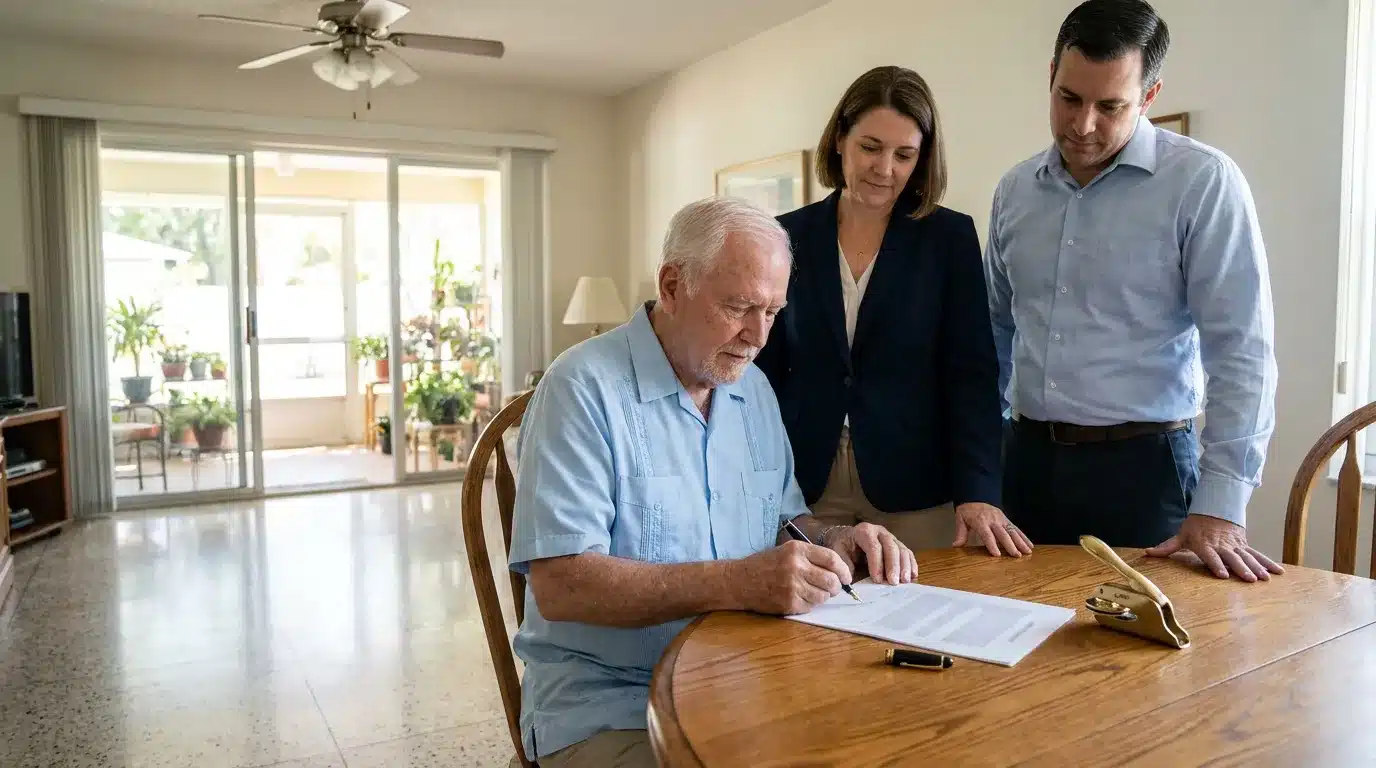
A Florida will must meet strict signing rules to be valid. Under Fla. Stat. § 732.502(1), the will must be in writing and signed at the end by the person making it (the testator), or by someone else in the testator’s presence and at the testator’s direction. The testator must sign, or acknowledge the signature, in front of at least two witnesses, who must sign in front of the testator and each other. A codicil, which amends a will, must be signed the same way.
Florida generally does not accept handwritten or oral wills on their own. Under Fla. Stat. § 732.502(2), a will signed by a nonresident is generally valid in Florida if it was valid where it was signed, but that rule excludes handwritten and oral wills. If you brought a will from another state, have it reviewed for Florida issues like homestead and who can serve as personal representative.
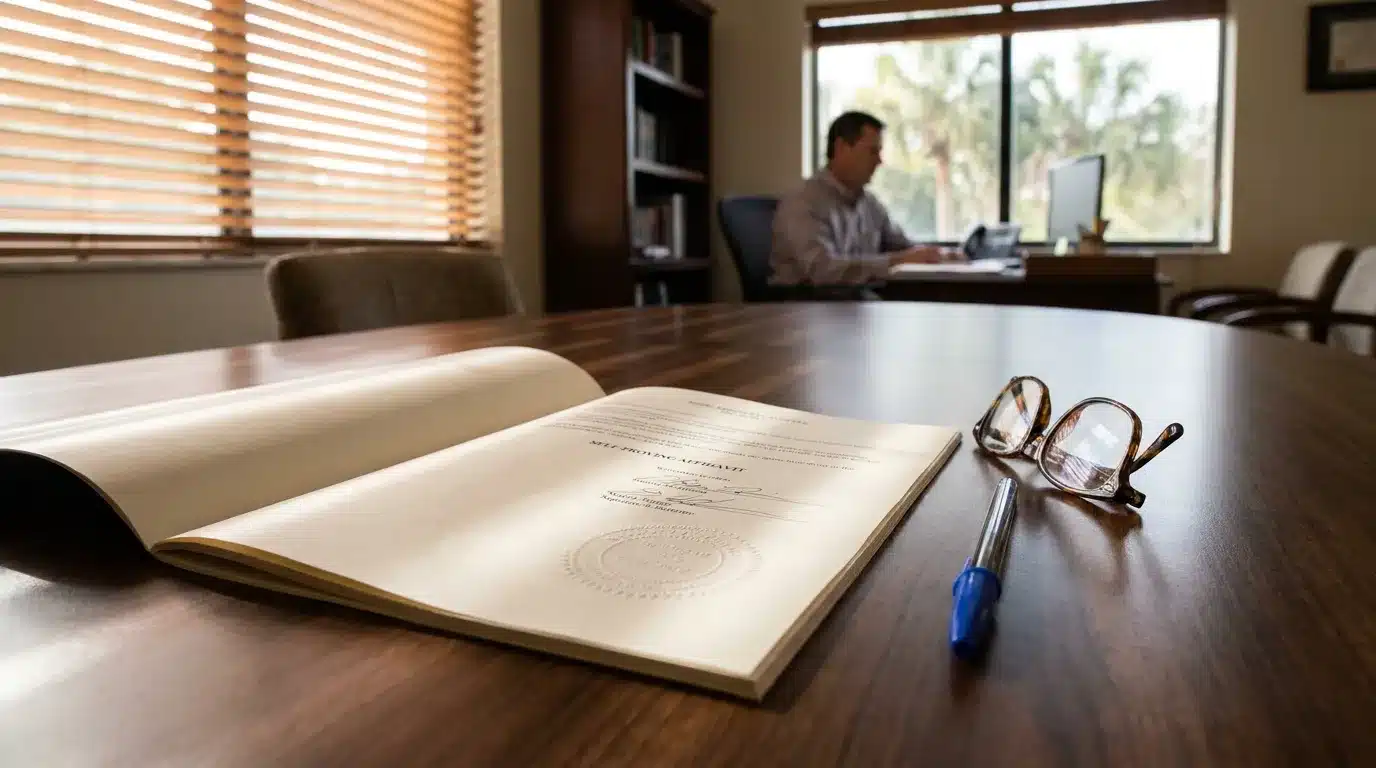
You can also make a will "self-proved," which can simplify probate. Under Fla. Stat. § 732.503, the testator acknowledges the will and the witnesses sign sworn statements before a notary or other officer. A court can generally accept a self-proved will without the witnesses’ testimony.
Florida also allows electronic wills under certain conditions. Fla. Stat. § 732.522 permits electronic signatures, and witnesses may join by video if an online notary supervises the session under Chapter 117. Extra safeguards apply to "vulnerable adults." As a tech-forward firm, we can help you decide whether signing electronically suits you.
💡 Pro Tip: Married couples often sign "mirror" wills. Under Fla. Stat. § 732.701, signing joint or mutual wills does not by itself create a contract not to revoke them. Any such agreement generally must be in writing and signed in front of two witnesses.
2. A Revocable Living Trust
A revocable living trust lets you manage your assets during life and pass them to loved ones, often without court-supervised probate for trust assets. The Florida Trust Code governs trusts in Florida. Retirees who own real estate in more than one state may find a trust especially useful, since it can help avoid a separate (ancillary) probate case in each state. A trust generally controls only assets titled in it or payable to it, so funding matters as much as signing. Many clients pair a trust with a "pour-over" will to catch assets left outside the trust, though those assets may still go through probate.
3. A Durable Power of Attorney
A durable power of attorney lets a trusted agent handle your finances if you cannot. The Florida Power of Attorney Act, Fla. Stat. Chapter 709, Part II, replaced prior law on October 1, 2011. Powers of attorney validly signed before that date generally remain valid, but if yours is older or came from another state, have it reviewed. Current law requires you (the principal) to sign in front of two witnesses and a notary. Under Fla. Stat. § 709.2202, some powers, such as making gifts or changing trusts, generally require you to initial or sign next to each one.
4. A Designation of Health Care Surrogate
A health care surrogate designation names the person who may make medical decisions when you cannot. Florida’s Chapter 765 governs these designations. You must sign in front of two adult witnesses, and at least one cannot be your spouse or blood relative. Without one, family members may disagree, and a court-supervised guardianship under Chapter 744 could become necessary. Choose someone who can get to Stuart quickly, and name a backup.
5. A Living Will
A living will states whether you want life-prolonging treatment if you have a terminal, end-stage, or persistent vegetative condition. Chapter 765 also governs living wills, and you generally must sign in front of two witnesses, at least one of whom is not your spouse or blood relative. It can spare loved ones from guessing what you would want.
6. Up-to-Date Beneficiary Designations
Retirement accounts, life insurance, and payable-on-death accounts generally pass by beneficiary designation, not by your will. Under Fla. Stat. § 732.703, naming a spouse as beneficiary generally becomes void if you later divorce, though exceptions apply. The statute may not apply to plans governed by federal law, such as many employer plans under ERISA. Review your designations after a marriage, divorce, or death in the family.
7. A Plan for Your Florida Homestead
Florida limits who can receive a homestead by will. Under Fla. Stat. § 732.4015, if you leave a spouse or minor child, you generally cannot leave the homestead by will, except to your spouse if there is no minor child. If you try to leave it in a way the law does not allow, Fla. Stat. § 732.401 generally gives the surviving spouse a life estate (or the option to take a one-half interest as a tenant in common), and the rest passes to your descendants. Under Fla. Stat. § 732.7025, a spouse can waive these rights by using specific statutory language in a deed. A valid prenuptial or postnuptial agreement under Fla. Stat. § 732.702 can also waive them.
Common Mistakes in a Treasure Coast Retiree Estate Plan
Most problems we see come from plans that no one updated after a move, marriage, or loss. A strong plan avoids these mistakes:
- Relying on an out-of-state will that ignores Florida homestead rules
- Leaving a revocable trust unfunded
- Naming an ex-spouse or someone who has died as a beneficiary
- Keeping a pre-2011 power of attorney that institutions may question
- Overlooking the surviving spouse’s elective share
Under Fla. Stat. § 732.2065, a surviving spouse can generally choose to take 30% of the elective estate. The elective estate can include more than probate assets, such as revocable trust assets, some jointly held property, and retirement accounts, and, since a 2017 statutory change, the decedent’s interest in protected homestead, unless the surviving spouse has validly waived homestead rights. This right may override your will or trust, so married retirees, especially those in second marriages, should plan for it. A valid prenuptial or postnuptial agreement under Fla. Stat. § 732.702 may waive it, but it must meet specific disclosure and signing rules.
What Happens Without These Documents
If a Florida resident dies without a valid will, state law generally decides who inherits. Fla. Stat. §§ 732.101-732.103 set out how the estate passes to a spouse, descendants, and other relatives, and the result may not match what you would have chosen. Learn more about how intestate succession works in general terms. For a broader review, our Florida estate planning checklist walks through more steps.
Frequently Asked Questions
1. Do I need a new will if I moved to Stuart from another state?
Not always, but you should have it reviewed. Under Fla. Stat. § 732.502(2), a will valid where it was signed is generally valid in Florida, unless it is handwritten or oral. However, homestead and personal representative rules may still cause problems.
2. Is a trust better than a will for Florida retirees?
It depends on your assets, family, and goals. A funded trust may help avoid probate and manage property in several states, while a will may be enough for simpler estates. Many retirees use both.
3. Can I leave my Florida home to my children instead of my spouse?
Generally not, if you leave a spouse or minor child, unless your spouse has validly waived homestead rights. Fla. Stat. §§ 732.4015 and 732.7025 generally govern this issue. Even with a spouse’s waiver, you generally cannot leave the home away from a surviving minor child.
4. Does Florida have an estate tax?
No, Florida does not currently have a state estate tax or inheritance tax. Federal estate tax may apply above the federal exemption, so larger estates should be reviewed with a lawyer.
5. How often should I update my estate plan?
Many attorneys suggest reviewing your plan every few years and after major life events. Moves, marriages, divorces, deaths, and health changes are all good reasons for a review.
Protecting Your Legacy on the Treasure Coast
The right documents let you decide who receives your property, who speaks for you, and how your loved ones are protected. Working with a Florida estate planning documents lawyer can help you build a plan that fits your life in Stuart and beyond.
Whether you live here year-round or are arriving for snowbird season, now is a good time to review your plan. Contact the Law Offices of Travis R. Walker today by visiting The Law Offices of Travis R. Walker, P.A. or calling 772-708-0952. Reach out to our Stuart, FL family law and estate planning attorneys.
Disclaimer: This content is for informational purposes only and is not legal advice. Every case is unique, and results may vary. Consult an attorney about your specific circumstances.