


Florida Divorce Process Flowchart: A Visual Guide
Navigate your dissolution of marriage with our clear Florida divorce process flowchart under Florida Statutes Chapter 61. Whether you are considering filing or have already started, this guide outlines the standard path to your Final Judgment of Dissolution of Marriage.
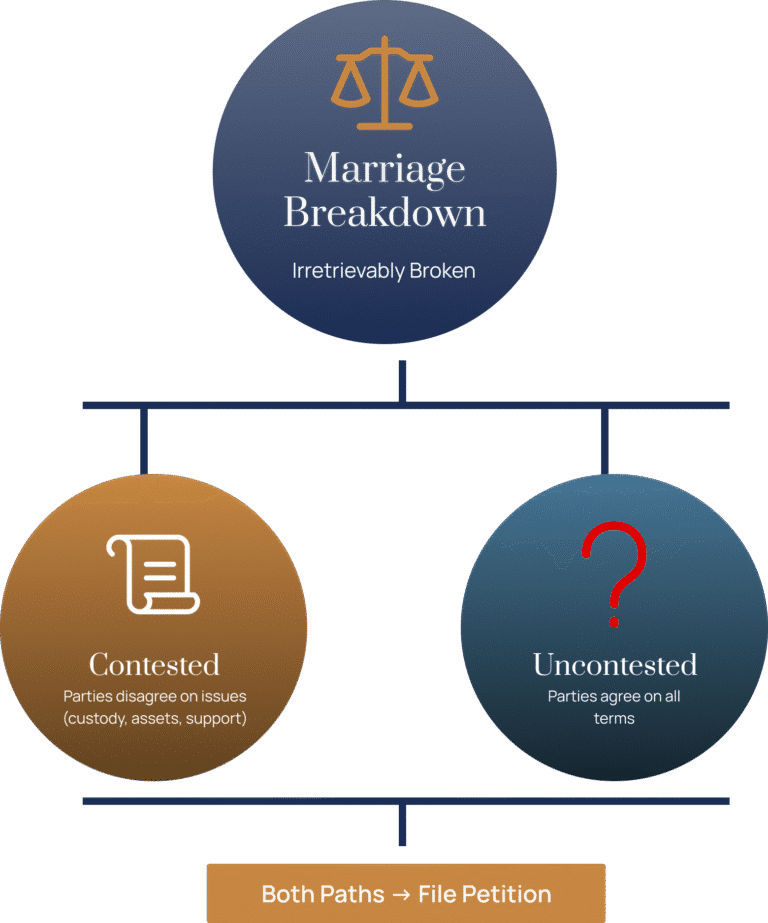
Understanding the Florida Divorce Process Flowchart
Filing for divorce in Florida, legally known as “dissolution of marriage,” follows a specific set of rules. While every case is unique, the procedural steps generally follow the flowchart below. Understanding this path can help reduce anxiety and set clear expectations for what lies ahead.
📋 Step 1: File the Petition
The process begins when one spouse (the Petitioner) files a Petition for Dissolution of Marriage in the circuit court of the county where either spouse resides. You must pay the filing fee and ensure the petition meets Florida’s residency requirements (one spouse must have lived in the state for at least 6 months).
📄 Step 2: Service of Process
The other spouse (the Respondent) must be formally notified. The sheriff or a special process server delivers the petition and a summons. The Respondent has 20 days to file a written response with the court (or 30 days if out of state).
📝 Step 3: Respondent’s Answer
The Respondent files an Answer stating whether they agree or disagree with the petition. They may also file a Counter-Petition if they have their own requests regarding assets, parenting plans, or support.
⚖️ Step 4: Temporary Hearings (If Needed)
If the spouses cannot agree on temporary arrangements (like who lives in the home, child support during the case, or temporary time-sharing), either party can request a temporary hearing to establish these rules while the divorce is pending.
🔍 Step 5: Discovery and Financial Disclosure
Florida law requires full financial transparency. Both parties must provide mandatory disclosure (tax returns, pay stubs, bank statements). This phase may also include formal discovery requests like interrogatories or depositions.
🤝 Step 6: Mediation
Most Florida courts require couples to attempt mediation before trial. A neutral mediator helps both sides negotiate a settlement. If an agreement is reached, it is written into a “Marital Settlement Agreement.”
🏛️ Step 7: Final Hearing
If Settled: If you have an agreement, you may have a brief, uncontested final hearing where the judge reviews the terms.
If Not Settled: If you cannot agree, the case proceeds to a final trial where a judge decides all contested issues.
✅ Step 8: Final Judgment of Dissolution of Marriage
Once the judge signs the Final Judgment, your marriage is legally dissolved. This document outlines the final rulings on division of assets, debts, parenting plans, and support obligations.
Simplified vs. Traditional Divorce
Not all divorces follow the exact same timeline. Florida offers different paths depending on your situation:
Uncontested Divorce: If both parties agree on all terms upfront, the process can move much faster, often skipping mediation and trial.
Simplified Dissolution: Available only to couples who meet specific criteria (no minor or dependent children, agreement on assets/debts, and both parties agree to the divorce).
Navigating the Florida divorce process flowchart can be overwhelming, especially during an emotional time. Whether you have questions about filing, mediation, or final hearings, we are here to help.
Contact our office today to get answers to any questions related to the Florida Divorce Process Flowchart.
Contact Our Expert Divorce Attorney
Learn more about Florida Divorce Process.