Why a Pour-Over Will Is a Safety Net and Doesn’t Replace Probate
Key Takeaways: A pour-over will does not avoid probate in Florida for assets still titled in your individual name when you die. Those assets usually have to go through summary or formal probate before they pass into your revocable living trust. Property you retitled into the trust during your lifetime typically skips probate, as do assets that pass directly by beneficiary designation or joint ownership with survivorship rights. Under Fla. Stat. § 732.513, a pour-over gift generally stays valid if you amend the trust, but fully revoking the trust in writing before death cancels it. A funded trust may give your family more privacy and less court involvement, but it doesn’t fully protect assets from creditors. To keep probate assets to a minimum, fund your trust while you’re alive, and review how your property is titled, especially if you’re a snowbird with real estate in another state.
If you have a revocable living trust, you may have been told that your pour-over will "catches everything" and keeps your family out of court. That’s only partly true. Under Florida law, a pour-over will generally does not avoid probate for assets still titled in your individual name when you die. Those assets usually have to pass through a Florida probate proceeding before they can "pour over" into your trust. Property you retitled into the trust during your lifetime typically skips probate, as do assets that pass directly to a named beneficiary or surviving joint owner. For Stuart and Treasure Coast families, especially snowbirds, knowing this difference can affect whether your plan works as intended.
Every family’s plan is different, so it helps to have someone check that your will and trust actually work together. The Law Offices of Travis R. Walker, P.A. helps Martin County and Palm Beach County residents build estate plans designed to hold up when they matter. Call us at 772-708-0952 or schedule a consultation with our team to review your documents.

How a Pour-Over Will Florida Residents Use Actually Works
A pour-over will is a will that leaves your remaining property to the trustee of your trust. Florida expressly allows this. Under Fla. Stat. § 732.513(1), you can make a valid devise to the trustee of a trust that is evidenced by a written instrument in existence when the will is made, or subscribed concurrently with the will, if the instrument is identified in the will. Under § 732.513(2), the devise is also not invalid because the trust is amendable or revocable, because the trust was amended or partly revoked after the will was executed, or because the only res of the trust is the possible expectancy of a devise under a will or of death benefits. In other words, you generally don’t have to fund the trust before you sign the will.
Once property passes through the will, it generally becomes part of your existing trust. Fla. Stat. § 732.513(5) provides that unless the will says otherwise, the devised property does not form a separate testamentary trust. Instead, it "shall become a part of the principal of the trust to which it is devised." Your trust’s instructions then generally control who receives it and when. You can read the full text in Florida’s Probate Code, Part V.
Your Trust Can Change Without Breaking the Will
One major benefit of pairing a pour-over will with a revocable living trust is flexibility. Under Fla. Stat. § 732.513(2), the devise is not invalid because the trust is amendable or revocable, or because it was amended or revoked in part after the will or a codicil was executed. Under § 732.513(3), the devise disposes of the property under the terms of the trust instrument as previously or subsequently amended. You can update your trust as your family grows or your business changes, and in many cases you won’t need to redo your will every time.
The One Change That Undoes the Pour-Over
There is one important exception. Fla. Stat. § 732.513(4) states that "an entire revocation of the trust by an instrument in writing before the testator’s death shall invalidate the devise or bequest." If you fully revoke your trust and never update your will, the pour-over gift fails, and your assets may pass in ways you didn’t plan. Keeping your will and trust coordinated is essential.
💡 Pro Tip: If you’re thinking about replacing an old trust with a new one, talk with your attorney about the order of steps first. Revoking the old trust before the new documents are properly in place could leave a gap in your plan.
Why the Pour-Over Will Still Goes Through Florida Probate
A pour-over will is still a will, so it generally has to be probated before it can transfer anything. Chapter 733 of the Florida Statutes governs how estates are administered. Section 732.513 authorizes the pour-over gift, but it doesn’t say the will avoids probate. Because the assets pass under the will, the court process usually has to happen first. We cover this broader issue in our article on whether a will avoids probate.
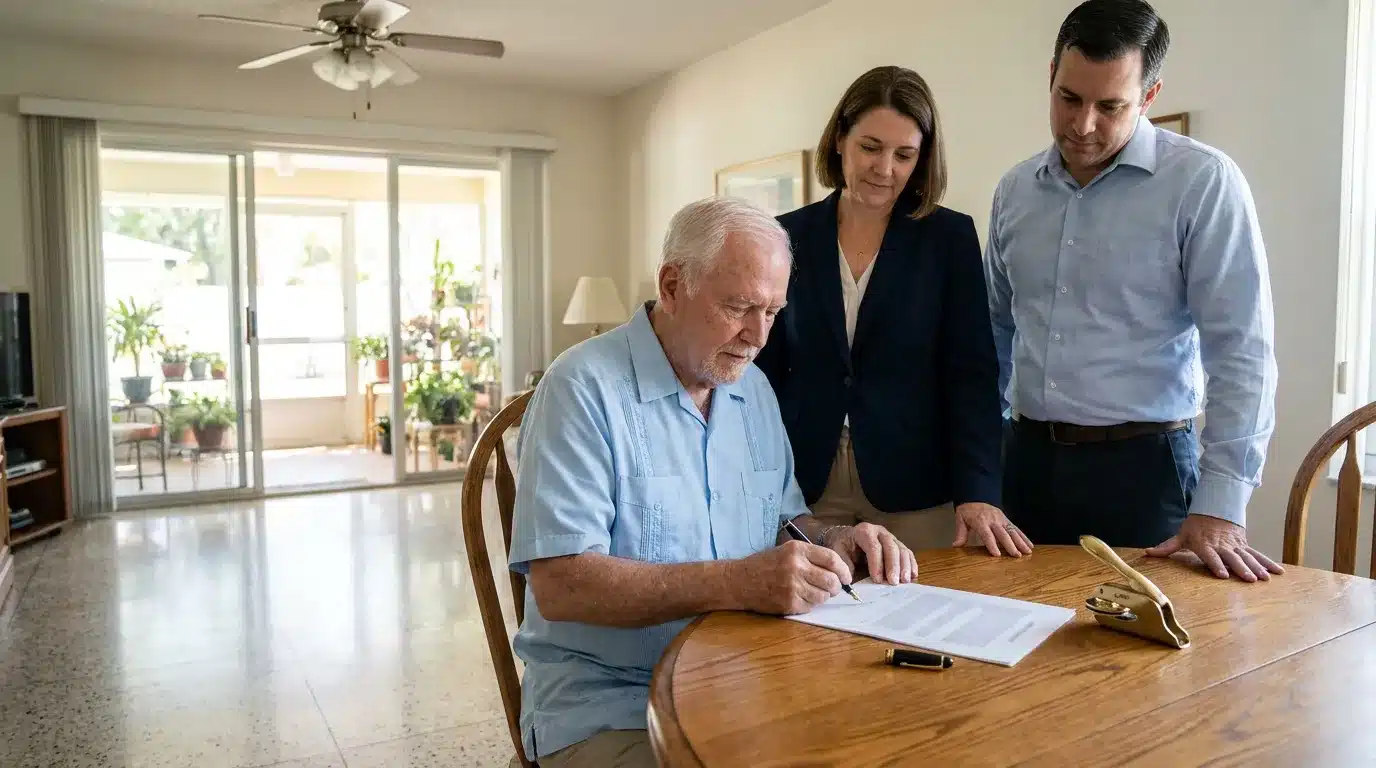
The will also has to be executed properly to work at all. Under Fla. Stat. § 732.502, you must sign at the end of the will, or have someone sign your name for you in your presence and at your direction. The signing must happen in the presence of two attesting witnesses, who must also sign in your presence and in each other’s presence. A defective will could keep assets from ever reaching your trust.
Summary Administration Still Involves the Court
Even smaller estates that qualify for summary administration still go through a court step. Summary administration is generally available when the value of the entire estate subject to administration in Florida, less property exempt from creditors’ claims, does not exceed $150,000, or when the decedent has been dead for more than two years. Under Fla. Stat. § 735.206(1), when the petition is filed, "the will, if any, shall be proved in accordance with chapter 733 and be admitted to probate." Section 735.206(2) also requires the petitioner to make a diligent search for known or reasonably ascertainable creditors, serve them with the petition, and provide for their payment to the extent assets are available. Even this "lighter" track involves court oversight that a fully funded trust could often bypass.
Formal Administration Adds a Creditor Process
Larger or more complex estates generally require formal administration, which includes a structured creditor claims process. Fla. Stat. § 733.702 generally bars claims that aren’t filed within statutory deadlines. That process usually takes at least several months.
Probate vs. Trust Administration in Florida
Trust administration in Florida is often faster and more private because courts play a much smaller role. Under Fla. Stat. § 736.0201(3), "a trust is not subject to continuing judicial supervision unless ordered by the court." A court may still step in when an interested person asks it to, such as to determine a trust’s validity or to appoint or remove a trustee. The full framework appears in the Florida Trust Code.
| Feature | Assets Passing by Pour-Over Will | Assets Already Titled in the Trust |
|---|---|---|
| Court involvement | Generally requires probate (summary or formal) | Generally no ongoing court supervision |
| Creditor process | Court-managed claims process | May still be liable for estate expenses and claims |
| Privacy | Will generally becomes part of the court file | Trust terms typically stay private |
| Final destination | Generally pours into the trust after probate | Governed by the trust from the start |
Funding a trust doesn’t fully shield assets from debts, though. Under Fla. Stat. § 733.707(3), assets of a trust that was revocable at the settlor’s death are liable for the costs of administering the estate and the decedent’s obligations if the probate estate isn’t enough to cover them. After the settlor dies, the trustee must also file a notice of trust with the court under Fla. Stat. § 736.05055. A trust can help avoid probate, but it isn’t a creditor shield.
Keeping Probate Assets to a Minimum
One of the most effective ways to limit probate is to fund your trust while you’re alive. Many people sign a trust and then never retitle their accounts or property. Common gaps include:
- Real estate, including a Stuart home or a second property up north, still deeded in your individual name
- Bank and brokerage accounts never moved into the trust
- Business interests never assigned to the trustee
- Vehicles, boats, or accounts opened after the trust was signed
Snowbirds face an added layer of complexity. If you own real estate in another state in your individual name, that property may need its own ancillary probate proceeding there. Titling it in your trust can often avoid that. Florida has no state estate tax, but federal estate tax may apply to larger estates, and some other states have their own estate or inheritance taxes.
💡 Pro Tip: Keep a simple asset inventory that notes how each account or property is titled and who the beneficiaries are. Review it every year, and after any major purchase, refinance, or move.
Frequently Asked Questions
1. If I have a pour-over will, do I still need a trust?
Yes. A pour-over will only works when it directs property into a trust that already exists or is signed at the same time as the will. It works best as a backup for assets you didn’t fund into the trust during your life.
2. Does a pour-over will Florida residents sign avoid probate?
Generally, no. Assets that pass under the will usually have to go through probate first. Assets already titled in the trust, or that pass by beneficiary designation or survivorship, typically avoid probate.
3. Can I change my trust after signing my pour-over will?
In many cases, yes. Under Fla. Stat. § 732.513(2), amending the trust or partly revoking it doesn’t invalidate the pour-over gift. Fully revoking the trust in writing before death, however, invalidates the devise under § 732.513(4).
4. Can creditors reach assets in my revocable trust?
Yes, in some circumstances. Under Fla. Stat. § 733.707(3), revocable trust assets can be used to pay administration expenses and the decedent’s obligations when the probate estate can’t cover them.
5. Do snowbirds need a different estate plan?
Often they do. Part-year residents may face domicile questions and out-of-state property issues that call for coordinated planning.
Protecting Your Family’s Future the Right Way
A pour-over will is a valuable safety net, but it doesn’t take the place of a properly funded trust. Florida law supports this strategy through Fla. Stat. § 732.513, but assets left in your name without a beneficiary designation will generally still go through probate. With thoughtful Florida estate planning, you can keep your trust and will coordinated, reduce the property that ends up in probate, and give your family clarity when they need it most.
You can make this easier for the people you love. Our team offers pour-over will Florida lawyer guidance for families throughout Stuart, Martin County, and the Treasure Coast. Contact The Law Offices of Travis R. Walker, P.A. today at 772-708-0952, or reach out to our Stuart, FL family law and estate planning attorneys.
Disclaimer: This content is for informational purposes only and is not legal advice. Every case is unique, and results may vary. Consult an attorney about your specific circumstances.