

Settling a Loved One’s Small Estate Without Full Probate
Key Takeaways: Under Fla. Stat. § 735.301, disposition without administration in Florida is available only when the person who died left personal property and no real property. That property must be exempt personal property, or non-exempt personal property worth no more than the preferred funeral expenses plus reasonable and necessary medical and hospital costs from the last 60 days of the last illness. The statute sets no fixed dollar cap, so qualification depends on that person’s own final expenses. Any interested party can apply informally, often the person who paid for the funeral. If the court finds that the estate qualifies, it can authorize release of the property without appointing a personal representative. A separate path under Fla. Stat. § 735.304 covers people who died without a will, with its own $20,000 add-on limit (increased from the former $10,000 threshold by ch. 2026-57), a one-year waiting period and creditor protections.
Losing someone you love is hard enough. Soon after, many families also face a funeral bill, a final hospital statement, and a bank account they cannot touch. Florida law offers a simpler path for some of these cases. Disposition without administration in Florida is available only when the person who died left personal property and no real property. That property must be exempt, or its non-exempt value must not exceed the preferred funeral expenses plus reasonable and necessary medical and hospital expenses from the last 60 days of the last illness. When an estate qualifies, the court may authorize release of the property without appointing a personal representative.
Every family’s situation is different, and small details can affect eligibility. If you are handling a loved one’s affairs in Stuart or elsewhere on the Treasure Coast, The Law Offices of Travis R. Walker, P.A. can help you understand your options. Call 772-708-0952 or schedule a consultation today to speak with our team.
What This Simplified Process Does
Disposition without administration is the simplest and most limited way to settle an estate under Florida probate law. Chapter 735 of the Florida Statutes covers "Small Estates," and Fla. Stat. § 735.301 deals with disposition without administration. No formal proceedings are needed when the estate meets its narrow conditions, but the court must still approve the release of property.
This process is separate from summary and formal administration. As of July 1, 2026, summary administration is generally available when the probate estate is worth no more than $150,000 (not counting exempt property) or when the decedent died more than two years ago, under Fla. Stat. § 735.201 as amended by Chapter 2026-57, Laws of Florida; the former $75,000 threshold still applies to estates of decedents who died before July 1, 2026. Formal administration is the standard process for larger or more complex estates. Disposition without administration sits below both and is meant for estates with very few assets and no real estate. You can read the full text of the Florida small estates statutes on the Florida Senate’s website.
This statute has been around for a long time. Section 735.301 has been part of Florida’s Probate Code since 1974. The Legislature last amended it in 2001 (ch. 2001-226). Local procedures and forms can still differ by county.
Who Qualifies Under Florida Statute 735.301
To see who qualifies, start with Fla. Stat. § 735.301(1). The decedent must have left only personal property, meaning no real property. The estate may contain only the following:
- Personal property that is exempt under Fla. Stat. § 732.402, such as household furniture, furnishings and appliances up to a set value, and certain motor vehicles, generally when a surviving spouse or children are entitled to them
- Personal property that the Florida Constitution protects from creditors’ claims
- Non-exempt personal property worth no more than the preferred funeral expenses plus reasonable and necessary medical and hospital expenses from the last 60 days of the last illness
If the estate includes any real estate, this route is not available. That includes a Stuart condo, a vacant lot in Martin County, or a seasonal home in Palm Beach County. Real property titled in the decedent’s name alone usually calls for summary or formal administration, or a homestead determination. Chapter 732 defines exempt property in Florida, which can help you sort out which items count.
Why There Is No Fixed Dollar Cap
Section 735.301 does not set a fixed dollar limit. Instead, the limit on non-exempt property depends on each person’s own funeral costs and final-illness medical bills. Only reasonable and necessary medical and hospital costs from the last 60 days of the last illness count.
An estate with more non-exempt property may still qualify if its final expenses were large enough. If a loved one spent several weeks in a hospital before passing, the limit may be higher than many families expect. An estate with modest funeral costs and no recent medical bills may have very little room.
What Counts as Personal Property
Personal property generally means assets other than land and the buildings attached to it. It can be tangible, such as furniture, jewelry, or a vehicle, or intangible, such as a bank account balance or a refund. Assets that pass directly to a named beneficiary or surviving co-owner, such as payable-on-death accounts and joint accounts with survivorship rights, usually fall outside the probate estate entirely.
💡 Pro Tip: Before you add up the estate’s value, gather every account statement and title document you can find. One missed asset could change whether the estate qualifies.
Who Can Apply and How the Clerk Reviews the Request
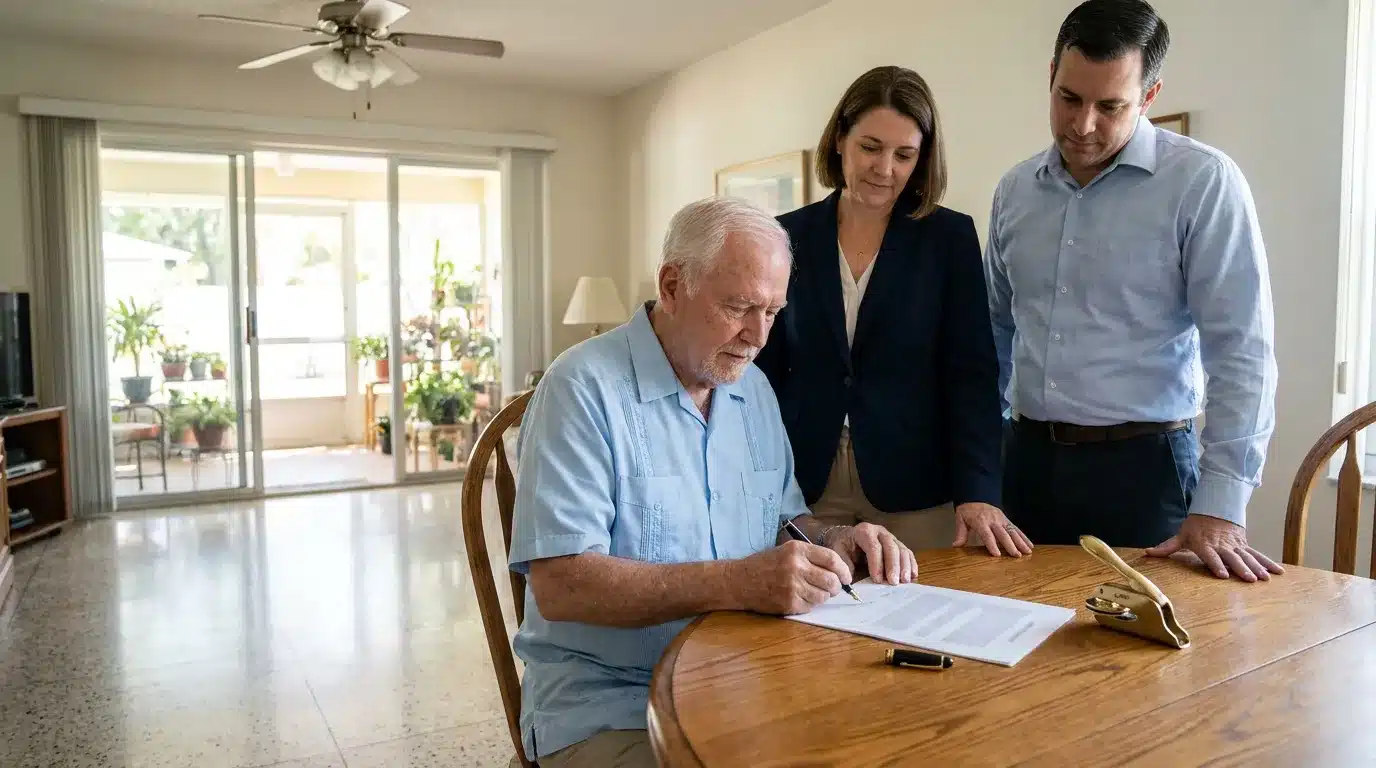
Any interested party may start the process informally under Fla. Stat. § 735.301(2). The statute permits an application "by affidavit, letter, or otherwise," so you do not need a full formal petition. Heirs, beneficiaries named in a will, and people who paid the decedent’s final expenses may generally apply.
The Person Who Paid the Funeral Bill
In many cases, the applicant is the person who paid the funeral expenses or final medical bills. Clerk guidance, including the Citrus County Clerk of Court’s FAQ, explains that this person may ask the court for repayment from the decedent’s remaining assets. Treasure Coast families often see this when an adult child pays for a parent’s funeral and then needs access to a small checking account to be repaid.
What Happens After the Court Approves
If the court finds that the estate qualifies, it may issue a letter or other writing under the court’s seal. That document authorizes payment, transfer, or disposition of the decedent’s personal property to the people entitled to it. Courts may ask for receipts, invoices, death certificates, or account statements.
The law protects banks and businesses that release property under this authorization. Under Fla. Stat. § 735.301(3), anyone who pays, delivers, or transfers property under the court’s authorization is "forever discharged from liability thereon." That protection often makes banks more willing to cooperate.
A Second Path for Those Who Died Without a Will
Florida also has a separate disposition without administration for people who died intestate (without a will), under Fla. Stat. § 735.304. This version allows more non-exempt personal property: $20,000 (increased from the former $10,000 threshold by ch. 2026-57) added to the preferred funeral expenses and the reasonable and necessary medical and hospital costs of the last 60 days. Two extra conditions apply. The person must have died more than one year ago, and no estate administration can be pending in Florida.
Under this section, an heir applies by affidavit. The surviving spouse, if any, and the heirs must sign and verify it. An heir who will receive a full intestate share under the proposed distribution does not have to sign.
This path also protects creditors. The person signing must make a diligent search for known or reasonably ascertainable creditors. The proposed distribution must provide for paying those creditors, or the creditors must consent. The applicant must also serve the affidavit by formal notice on heirs who did not sign and on known creditors. If the decedent was over age 55, the applicant must also serve it on the Agency for Health Care Administration, Florida’s Medicaid agency.
| Feature | Fla. Stat. § 735.301 | Fla. Stat. § 735.304 |
|---|---|---|
| Will required? | No restriction | Decedent died intestate |
| Real property allowed? | No | No |
| Value limit | Funeral plus final 60-day medical costs | $20,000 plus those same costs |
| Waiting period | None stated | More than 1 year after death |
| Who applies | Any interested party | Heir by verified affidavit |
Common Problems Families Face
One of the most frequent problems is finding real property late in the process. An interest in Florida real estate, such as a deeded timeshare or an inherited share of land, may disqualify the estate. Real property in another state generally falls under that state’s probate laws. Snowbird families with homes both here and up north often face this, and ancillary probate (a second probate case in the other state) may be needed.
Another problem is proving final expenses. Only reasonable and necessary medical and hospital costs from the last 60 days of the last illness count. For a broader look at the other options, see our guide to probate alternatives in Florida.
💡 Pro Tip: Ask for itemized hospital statements that show dates of service. Itemized bills make it easier to show which charges fall within the 60-day window.
Frequently Asked Questions
1. Does disposition without administration in Florida require a lawyer?
The statute allows informal applications, so you generally do not need a lawyer. Even so, mistakes in valuing assets or classifying exempt property may delay the process or lead the court to deny the request. Many families consult an attorney to prepare the request correctly.
2. Can I use this process if my loved one owned a home?
Generally, no. Section 735.301 applies only when the decedent left only personal property. A home owned with a surviving spouse as tenants by the entirety, or with a survivorship right, may pass outside probate. Estates that include a home in the decedent’s name usually call for summary or formal administration, or a homestead determination.
3. What if the estate has more money than the final expenses?
The estate may still qualify if the extra assets are exempt property. If non-exempt assets exceed the funeral and final medical costs, you may need another option, such as § 735.304 for certain intestate estates, summary administration, or formal administration.
4. How long does the process take?
Timing varies by county and by how complete the paperwork is. Clear records generally help the clerk and court review the request faster.
5. Can creditors object?
Under Fla. Stat. § 735.304, the applicant must serve known creditors and provide for them unless they consent. Under § 735.301, the non-exempt property involved is limited to what covers the preferred final expenses, which take priority over most other creditors’ claims. Outcomes depend on your specific facts.
Moving Forward
Disposition without administration may offer Florida families a simpler path when an estate holds only personal property and no real estate. Eligibility depends on exempt property rules, funeral expenses, and final medical costs. For intestate estates, it also depends on the extra requirements of Fla. Stat. § 735.304. Because small details can change the answer, a skilled disposition without administration Florida lawyer can help you avoid needless delays.
You do not have to handle this alone. The Law Offices of Travis R. Walker, P.A. helps Stuart, Martin County, and Treasure Coast families settle estates with care and modern efficiency. Call (772) 708-0952 or reach out to our office today.
Disclaimer: This content is for informational purposes only and is not legal advice. Every case is unique, and results may vary. Consult an attorney about your specific circumstances.