

Planning Ahead So Your Home Passes Smoothly to Your Family
Key Takeaways: A Florida Lady Bird deed, also called an enhanced life estate deed, lets you keep full control of your home during your lifetime while naming a beneficiary who automatically inherits it at your death. It avoids probate because the property transfers by operation of the deed itself, without court involvement. This spares your family probate delays and statutory costs, such as personal representative commissions and attorney fees. Unlike a traditional life estate, the enhanced version lets you sell, refinance, or change the beneficiary without anyone’s permission. However, Florida homestead law, marital rights, and domicile questions for snowbirds can significantly affect how your home passes. Working with a knowledgeable Florida attorney helps ensure the deed accomplishes your goals.
A Florida Lady Bird deed is a special type of deed that lets you keep full control of your home during your lifetime while naming who inherits it automatically at your death, allowing the property to bypass probate entirely. For many Stuart and Treasure Coast homeowners, the family home is both the largest asset and the most emotionally significant. This deed names a beneficiary to receive your home when you die while allowing you to retain a life estate, giving you flexibility today and a clean transfer tomorrow.
Whether you are a year-round Martin County resident or a snowbird splitting time between Florida and another state, understanding how this tool works can help you protect what matters most. If you are ready to explore whether this strategy fits your situation, the team at The Law Offices of Travis R. Walker, P.A. can help. You can call us at 772-708-0952 or reach out through our contact page to schedule a consultation.
How a Florida Lady Bird Deed Avoids Probate
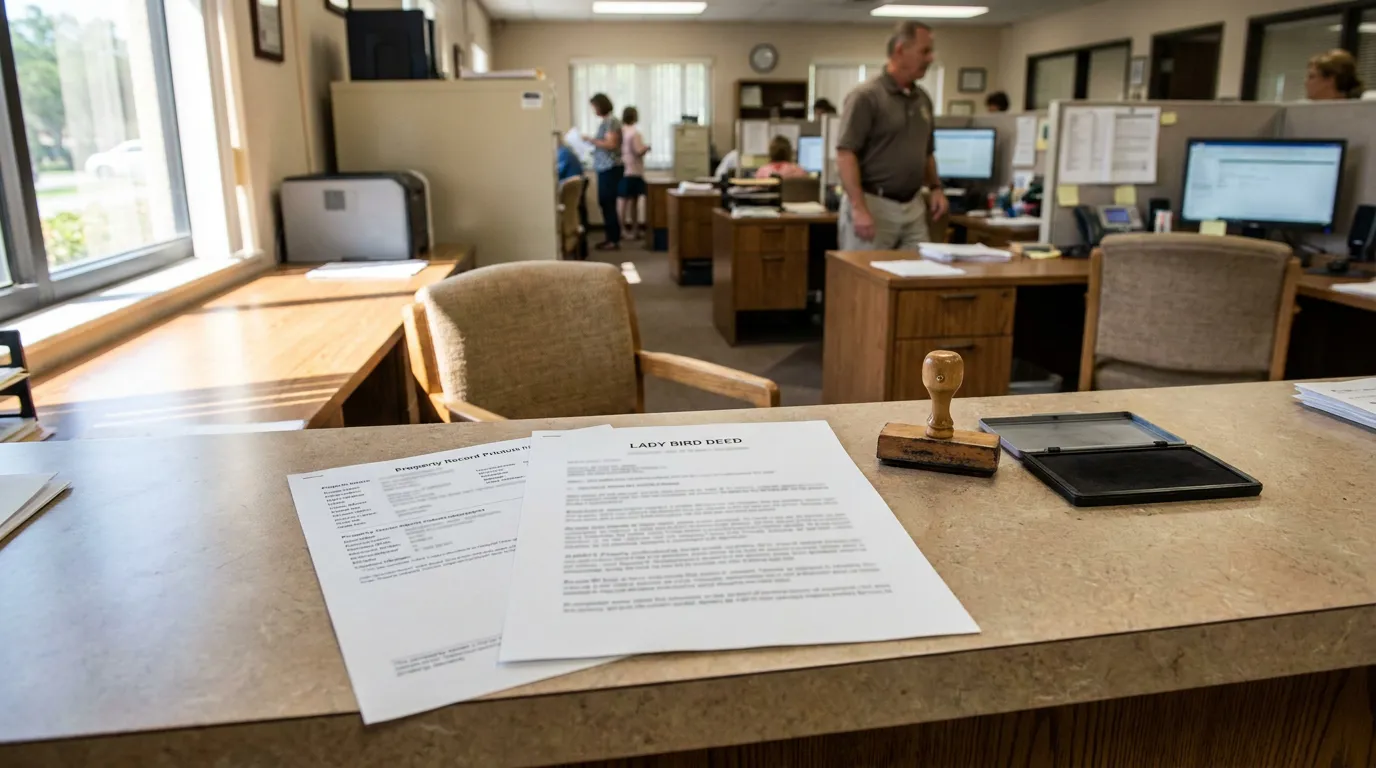
The Lady Bird deed avoids probate because the property transfers automatically to your named beneficiary the moment you pass away, without any court involvement. The remainder beneficiary steps into ownership by operation of the deed itself, without waiting on a judge to validate a will and authorize distribution.
This works differently than transferring property through a will. Under Florida law, a will has no power to move title until a court acts.
Until admitted to probate in this state or in the state where the decedent was domiciled, the will shall be ineffective to prove title to, or the right to possession of, property of the testator, per Fla. Stat. § 733.103(1).
Because a properly executed Lady Bird deed passes the home outside of probate, your family does not depend on that court process.
What Makes This Deed "Enhanced"
The Lady Bird deed is often called an enhanced life estate deed because it gives the owner more power than a traditional life estate. With a standard life estate, you would need your beneficiary’s consent to sell or mortgage the property. With the enhanced version, you keep the right to sell, refinance, or change the beneficiary without anyone’s permission.
This type of deed is not available everywhere.
Five states have something similar to a transfer-on-death deed called a Lady Bird deed or enhanced life estate deed.
Florida is one of the jurisdictions that recognizes this approach.
It is like a regular deed used to transfer real estate, with a crucial difference: it does not take effect until your death.
Why Probate Is Worth Avoiding in Florida
Probate is the court-supervised process of validating a will and distributing a decedent’s assets, and it can be time-consuming and costly. Florida probate is governed by the Florida Probate Code, found in Title XLII, Chapter 733. The process exists to protect creditors and heirs, but it also adds delay and expense many families would rather avoid.
The court treats the probate of a will as a formal, conclusive event.
Under Fla. Stat. § 733.103(2), in any collateral action or proceeding relating to devised property, probate of a will in Florida is conclusive of its due execution, that it was executed by a competent testator, free of fraud, duress, mistake, and undue influence, and that the will was unrevoked on the testator’s death.
That formality is exactly what a Lady Bird deed helps property owners bypass. For a fuller picture of how these strategies fit together, our overview of probate avoidance Florida options explains when each approach tends to apply.
The Costs That Come With Probate
Probate can reduce the net value that ultimately reaches your heirs. Several statutory expenses may come out of the estate before beneficiaries receive anything:
Personal representative compensation.
Under Fla. Stat. § 733.617, a personal representative’s commission is presumed reasonable at the rate of 3 percent for the first $1 million of the estate’s compensable value.Attorney fees and costs.
Under Fla. Stat. § 733.106, in all probate proceedings costs may be awarded as in chancery actions, and attorneys rendering services to an estate may be awarded reasonable compensation from the estate.Time and administrative delay while the estate stays open and creditors are notified.
These expenses illustrate why keeping the home out of probate is a common goal.
For most homeowners, keeping a house out of probate is their biggest probate-avoidance wish and challenge; a living trust works well, but not everyone wants the expense and trouble of creating one.
💡 Pro Tip: A Lady Bird deed only covers the specific property it describes. It does not replace a comprehensive plan, so review your other assets, beneficiary designations, and documents together.
How Florida Homestead Law Affects Your Deed Choices
Florida’s homestead rules can significantly shape how your home passes at death, so they must be considered before signing any deed. Under the Florida Constitution, if you are survived by a spouse or minor child, your ability to leave homestead to anyone else is restricted, and a Lady Bird deed naming a different beneficiary may not accomplish what you intend.
Under Fla. Stat. § 732.401(1), if the homestead is not devised as authorized by law and the constitution, it descends as intestate property; if the owner is survived by a spouse and descendants, the spouse takes a life estate with a vested remainder to the lineal descendants per stirpes.
Florida also gives a surviving spouse an important choice.
Under Fla. Stat. § 732.401(2), a surviving spouse may elect to take an undivided one-half interest as a tenant in common in lieu of the default life estate.
These provisions show that homestead succession follows its own statutory framework separate from deed-based transfers.
Survivorship arrangements also interact with these rules.
Under Fla. Stat. § 732.401(5), the homestead-descent section does not apply to property owned in tenancy by the entireties or in joint tenancy with rights of survivorship.
That underscores a broader point: several tools can move a home outside the standard probate path, and the right one depends on your marital status, family, and goals.
Comparing the Lady Bird Deed to Other Transfer Tools
A Lady Bird deed is one of several ways Treasure Coast families can transfer a home at death, and each option carries trade-offs. A living trust offers broad control over many assets, joint tenancy adds a co-owner during your lifetime, and beneficiary-focused deeds keep things simple for a single property.
A Snapshot for Treasure Coast Homeowners
| Transfer Tool | Control During Life | Probate Avoidance | Common Consideration |
|---|---|---|---|
| Florida Lady Bird deed | Full control; can sell or change beneficiary | Yes, for that property | Availability is state-specific |
| Living trust | Full control as trustee | Yes, for funded assets | More setup involved |
| Joint tenancy with survivorship | Shared with co-owner | Yes, at death | Adds a present co-owner |
This deed can also play a role in longer-term planning.
A Lady Bird deed may be a solution if you are trying to protect your home from Medicaid estate recovery, though state-specific rules apply and consulting a local lawyer is recommended.
You can learn more about the mechanics of the enhanced life estate deed and how it functions across different states.
For snowbirds and part-year residents, domicile adds another layer. If you split time between Florida and another state, questions about where you are domiciled can affect how your estate plan operates. Our florida lady bird deed lawyer team regularly helps seasonal residents align their documents with Florida law.
Frequently Asked Questions
Below are common questions Stuart and Martin County families ask about this planning tool.
1. Can I still sell my home after signing a Lady Bird deed?
Yes, you retain full control during your lifetime. The enhanced life estate deed lets you sell, refinance, or change the beneficiary without consent, maintaining flexibility that a traditional life estate does not offer.
2. Does a Lady Bird deed override my will?
Generally, property transferred by a valid deed passes outside your will. Since the deed operates at death independently of probate, the home typically goes to the named remainder beneficiary regardless of what your will says, subject to Florida’s homestead restrictions.
3. Is a Lady Bird deed the same as a transfer-on-death deed?
They are similar in purpose but not identical.
A Lady Bird deed, or enhanced life estate deed, is an option in a small number of states as an alternative to a transfer-on-death deed.
Florida recognizes the Lady Bird approach for real estate.
4. Will my family still need probate for other assets?
Possibly, depending on how your remaining assets are titled. A Lady Bird deed addresses only the property it describes, so other accounts and belongings may still pass through probate unless otherwise planned for.
5. Does Florida have a state estate tax on my home?
Florida does not impose a state estate tax. Federal estate tax may apply above the federal exemption threshold, but that is a separate analysis best reviewed with a qualified attorney.
Protecting Your Legacy on the Treasure Coast
A florida lady bird deed can be a straightforward, effective way to pass your home to loved ones while keeping control during your lifetime. It offers a practical path around probate for one of your most important assets and fits naturally into a broader plan that accounts for Florida homestead rules, marital rights, and domicile questions for seasonal residents. Because outcomes depend on your specific facts, and because homestead and probate law contain meaningful exceptions, working with a knowledgeable attorney helps ensure your deed does what you intend.
You do not have to navigate these decisions alone. Reach out to our Stuart, FL family law and estate planning attorneys at The Law Offices of Travis R. Walker, P.A. to discuss your goals. Call 772-708-0952 or contact us now to schedule a consultation.