Understanding the Moment Your Wishes Take Over
Key Takeaways: A Florida living will does not take effect when you sign it. It becomes operative only after physicians determine that you have no reasonable medical probability of recovering capacity and that you have a terminal condition, an end-stage condition, or are in a persistent vegetative state. Under Fla. Stat. § 765.306, your attending or treating physician and at least one other consulting physician must each examine you separately and document and sign their findings in your medical record before life-prolonging procedures are withheld or withdrawn. The document must be signed before two adult witnesses, at least one of whom is neither your spouse nor a blood relative. A living will can work without a named health care surrogate, but many people name one anyway. Treasure Coast residents and snowbirds should review older or out-of-state directives and treat the living will as one part of a coordinated estate plan.
A Florida living will does not take effect when you sign it. It becomes operative only after physicians determine that you have no reasonable medical probability of recovering the capacity to make your own medical decisions, and that you have a terminal condition, an end-stage condition, or are in a persistent vegetative state. Any limits or conditions you included must also be met. Until then, you generally keep control over your own care.
If you are putting together or updating your advance directives, The Law Offices of Travis R. Walker, P.A. can help you plan with confidence. Visit The Law Offices of Travis R. Walker, P.A., call 772-708-0952, or schedule your consultation today to talk through your goals with our team.
Why Florida Treats a Living Will as a Legal Safeguard
Florida recognizes your right to decide in advance how life-prolonging medical treatment should be handled. Under Fla. Stat. § 765.102, a competent adult may make an advance directive instructing a physician to provide, withhold, or withdraw life-prolonging procedures. The purpose is to respect a person’s rights and intentions even after he or she can no longer take part in decisions about care.
This framework comes from statute, not only from your document’s wording. Florida’s modern living will rules trace back to Chapter 92-199, Laws of Florida, the 1992 session law that led to Chapter 765 of the Florida Statutes. Because Chapter 765 governs when a living will can be used, even a carefully drafted directive works within limits set by law.
What This Means for Treasure Coast Retirees and Snowbirds
Many Martin County and Palm Beach County residents split their year between Florida and another state. Under Fla. Stat. § 765.112, an advance directive signed in another state is generally valid in Florida if it complied with the laws of that state or of Florida. Differences in format and terminology can still cause confusion, so seasonal residents establishing Florida domicile should review their health care documents alongside their wills and trusts.
Florida Living Will Requirements for a Valid Document
Before a living will can take effect, it has to be validly executed. Under Fla. Stat. § 765.302, any competent adult may make a living will at any time. The document must be signed in the presence of two adult witnesses, at least one of whom is neither your spouse nor a blood relative. If you are physically unable to sign, one of the witnesses may sign your name at your direction and in your presence.
Meeting these requirements at signing can help prevent problems later. Witnessing defects may leave your family and physicians uncertain about whether they can rely on the document. Section 765.302 also makes you responsible for telling your attending or treating physician that you have a living will, so give your doctors a copy for your medical record.
💡 Pro Tip: Keep a list of everyone who holds a copy of your living will, including your primary care doctor, any local hospital system, and your health care surrogate. If you revise the document, that list makes it easier to replace outdated versions.
The Two Conditions That Trigger Living Will Activation in Florida
Activation depends on specific medical findings, not on a date or a signature. Under Fla. Stat. § 765.304(2), before acting on your living will, the physician (or your surrogate) must be satisfied that you have no reasonable medical probability of recovering capacity, that you have a qualifying condition, and that any limits or conditions you expressed have been considered and met.
Incapacity Under a Florida Living Will
The first question is whether you can still make your own health care decisions. Under Fla. Stat. § 765.204, your attending physician evaluates your capacity and, if you lack it, records that finding in your medical record. If the physician is unsure, another physician must also evaluate you.
Qualifying Medical Conditions
The second question is whether your medical situation fits a condition defined in Chapter 765. The statutory definitions in § 765.101 set out what counts as a terminal condition, an end-stage condition, and a persistent vegetative state. The table below summarizes them in general terms.
| Condition | General Meaning Under Fla. Stat. § 765.101 |
|---|---|
| Terminal condition | Caused by injury, disease, or illness with no reasonable medical probability of recovery, and expected to cause death without treatment |
| End-stage condition | An irreversible condition that has led to progressively severe, permanent deterioration and for which treatment would, to a reasonable degree of medical probability, be ineffective |
| Persistent vegetative state | A permanent, irreversible unconsciousness with no voluntary action or cognitive behavior and no ability to communicate or interact purposefully with the environment |
Whether a diagnosis qualifies can depend on medical judgment and specific facts. Families should expect physicians to document their conclusions carefully.
Physician Certification: The Two-Doctor Safeguard
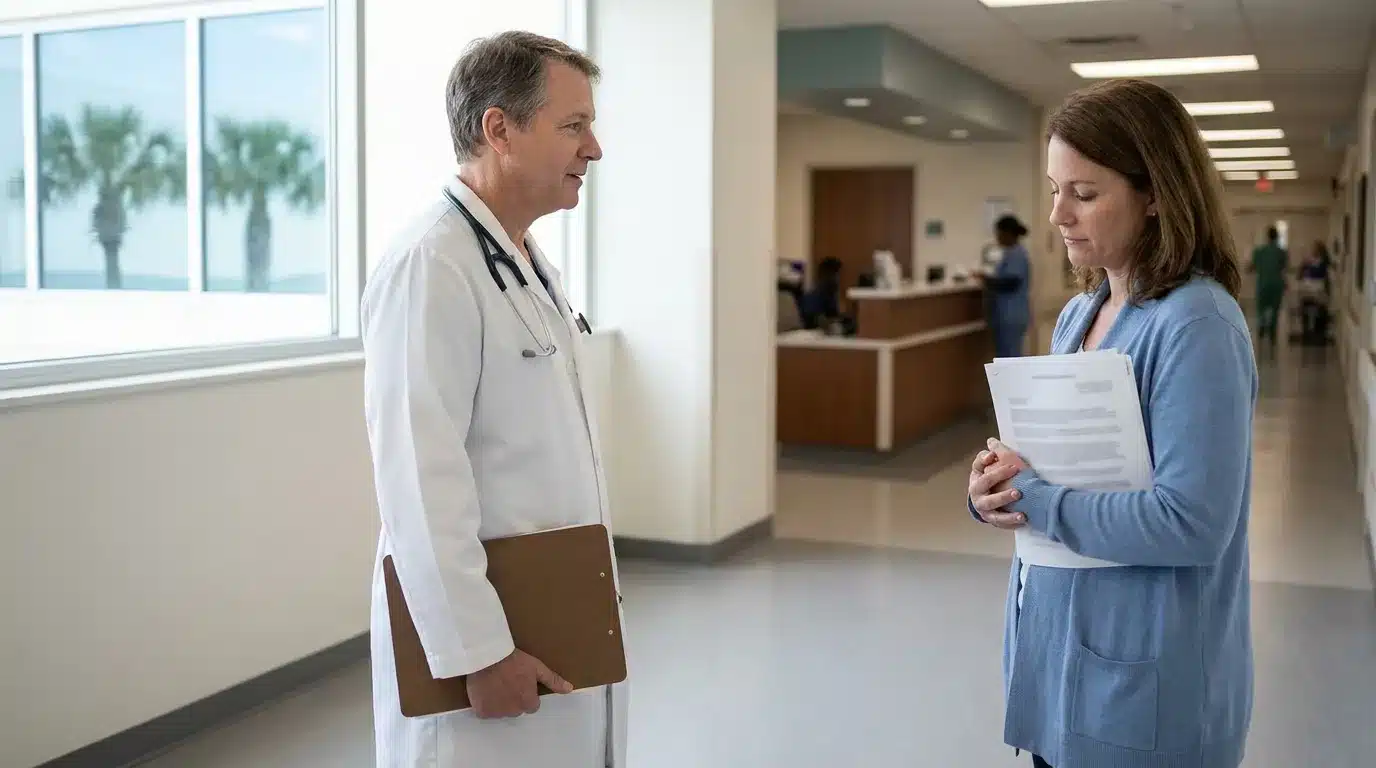
Florida requires more than one physician to confirm your condition before life-prolonging procedures are withheld or withdrawn. Under Fla. Stat. § 765.306, your attending or treating physician and at least one other consulting physician must each examine you separately to decide whether you have a qualifying condition, whether you may recover capacity, and whether any condition named in your directive exists. Each must document and sign their findings in your medical record.
This is one of the strongest protections in Chapter 765. One doctor alone cannot put your living will into effect. For families facing a crisis at a hospital in Stuart or elsewhere on the Treasure Coast, this safeguard can ease fears of a hasty decision.
Does a Living Will Work Without a Health Care Surrogate?
Yes, a living will can operate even if you have not named a surrogate. Under Fla. Stat. § 765.304(1), if you have a living will but no surrogate, your attending or treating physician may proceed as the living will directs once the required determinations are made. If there is a dispute over the physician’s decision, however, life-prolonging procedures may not be withheld or withdrawn while the matter is under review under Fla. Stat. § 765.105. Many people still name a surrogate to handle decisions the document does not address.
How Living Wills Interact With Guardianship and Court Oversight
A valid advance directive may reduce the need for court involvement in some situations. Under Fla. Stat. § 393.12, when a court considers appointing a guardian advocate for a person with a developmental disability, it must determine whether that person has executed a valid advance directive under Chapter 765 or a durable power of attorney under Chapter 709, and whether those documents adequately meet the person’s needs.
Courts also keep oversight authority. Section 393.12 allows a court to modify or revoke a health care surrogate’s authority, with notice, on the grounds listed in Fla. Stat. § 765.105.
Practical Steps Stuart Families Can Take Now
Treasure Coast residents should treat the living will as one part of a coordinated plan. Section 765.102 encourages communication among the patient, family, and medical professionals. Consider these steps:
- Discuss your values and treatment preferences with your loved ones and physicians
- Name a health care surrogate who understands your wishes and lives reasonably close by
- Review older or out-of-state documents if you have become a Florida resident
- Store copies where your family and doctors can reach them quickly
- Revisit your directives after major life events, such as a diagnosis, marriage, or loss of a spouse
A living will works best alongside your other planning documents. Our estate planning checklist can help you see how health care directives fit with wills, trusts, powers of attorney, and beneficiary designations.
💡 Pro Tip: Snowbirds should keep a digital copy of their living will on their phone or in a secure cloud folder so your wishes can reach treating physicians sooner in an emergency while traveling.
Working with a Stuart estate planning attorney can help you account for the details. You can learn more on our Stuart estate planning attorney page.
Frequently Asked Questions
1. Does my living will take effect as soon as I sign it?
No. Under Fla. Stat. §§ 765.304 and 765.306, a Florida living will becomes operative only after physicians determine that you have no reasonable medical probability of recovering capacity and that you have a terminal condition, an end-stage condition, or are in a persistent vegetative state. While you can make your own decisions, you remain in control.
2. How many doctors must agree before my living will is followed?
Under Fla. Stat. § 765.306, your attending or treating physician and at least one other consulting physician must each examine you separately and document and sign their findings in your medical record.
3. Who can witness my Florida living will?
You need two adult witnesses under Fla. Stat. § 765.302. At least one must be neither your spouse nor a blood relative.
4. Will Florida honor a living will I signed in another state?
Generally, yes. Under Fla. Stat. § 765.112, an out-of-state advance directive is valid in Florida if it complied with the laws of the state where it was signed or with Florida law. Because formatting and definitions vary, snowbirds and new Florida residents should still have an attorney review any out-of-state directive.
5. Can I change my living will later?
Yes. Under Fla. Stat. § 765.104, a competent adult may amend or revoke an advance directive at any time, by a signed, dated writing, by physically destroying the document, by speaking your intent to revoke, or by signing a materially different new directive. Talk with an attorney about the proper steps so older versions do not create confusion.
Protecting Your Voice When It Matters Most
A Florida living will takes effect only when strict statutory conditions are met. Two physicians, each examining you separately and documenting their findings, must confirm that you have no reasonable medical probability of regaining capacity and that you have a qualifying condition. Proper execution, open conversations with loved ones, and regular reviews can help your wishes carry the weight you intend.
Planning ahead is one of the most caring gifts you can give your family. Contact the Law Offices of Travis R. Walker today. Visit Travis R. Walker, P.A., call 772-708-0952, or reach out to our team online to schedule a consultation with our team.
Disclaimer: This content is for informational purposes only and is not legal advice. Every case is unique, and results may vary. Consult an attorney about your specific circumstances.