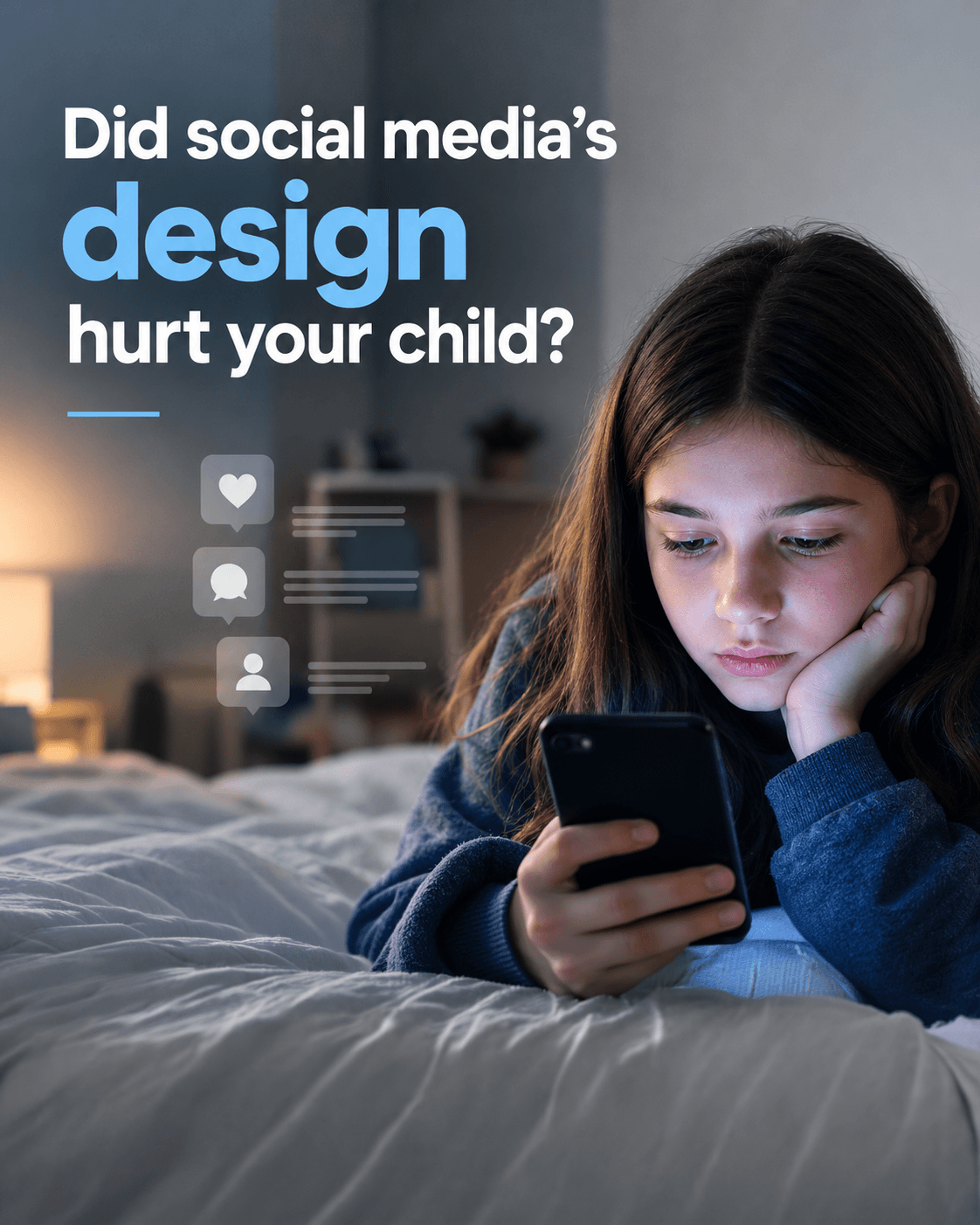
A doctor in Port St. Lucie sued over license plate cameras two weeks ago. This week the fight over the phone in your kid’s pocket moved just as fast.
On October 14, a three judge panel of the United States Court of Appeals for the Eleventh Circuit ruled in Computer and Communications Industry Association v. Attorney General, State of Florida, No. 25-11881. The panel, Judges Kevin Newsom, Robert Luck, and Gerald Tjoflat, reversed a preliminary injunction that had blocked Florida from enforcing part of House Bill 3, the 2024 law restricting how minors use social media, and sent the case back to the trial court in Tallahassee for more work on a separate piece of the challenge. The practical effect is immediate. The injunction that had stopped Florida from enforcing the law against these plaintiffs is gone.
Three days before that ruling, Florida’s Attorney General asked a different judge to force Meta to turn off the features that keep teenagers scrolling. And since last year, the school boards in Martin, St. Lucie, and Indian River County have had their own separate claim sitting in federal court, asking for money over what these same platforms did to their students. Three different fights. The same underlying question. Who answers for what these apps do to a kid, and how.
What the court actually decided
House Bill 3 lives at section 501.1736, Florida Statutes. It bars anyone younger than 14 from opening an account on a platform that uses what the law calls addictive features, things like infinite scrolling, push notifications, autoplay video, and metrics showing how many people reacted to a post. Anyone 14 or 15 can hold an account only with a parent or guardian’s consent. A platform that terminates an account under the law has to give the account holder 90 days to dispute it. If the account holder asks to close the account, the platform has 5 business days. If a parent asks, it has 10.
NetChoice and the Computer and Communications Industry Association, trade groups representing the platforms, argued the law violates the First Amendment. The panel disagreed, mostly. It held that HB3 regulates how a platform is built and who can access it, not what anyone says on it, which makes it a content neutral law rather than a restriction on speech itself. A content neutral law only has to pass what courts call intermediate scrutiny, meaning it has to serve an important government interest without burdening substantially more speech than necessary. The panel found Florida’s interest in protecting children from compulsive platform design clears that bar.
The ruling did not end the case. The panel sent a broader challenge to the law back to the district court for more fact finding, and the platforms can still raise it there. But the preliminary injunction that had frozen enforcement against these plaintiffs is reversed. Florida can enforce House Bill 3 while that fight continues.
A lawsuit that already sits in St. Lucie County
Florida is not only defending this law on appeal. It is suing to enforce it, and one of those cases is already on the Treasure Coast. In June, Attorney General James Uthmeier sued TikTok in a St. Lucie County court. The complaint alleges TikTok does not require parental consent for 14 and 15 year olds the way the statute demands, that it understated how often users run into drugs, nudity, and other mature content, and that it set its own age rating to get around the parental controls built into Apple devices. The state wants a declaration that TikTok is a public nuisance, an order stopping the alleged conduct, the statutory penalty of up to $50,000 per violation, and damages Uthmeier has said publicly could run into the billions.
On October 7, Uthmeier went after Meta too, asking a judge in Pasco County to order Instagram and Facebook to verify ages, remove users under 14, kill the addictive features, add a nighttime quiet mode, and cap monthly use. Meta calls the request meritless. That motion is still pending.
The claim that belongs to the family, not the state
Here is what gets lost when the news covers these cases. Every one of them is Florida suing as Florida, to enforce a public statute and collect a public penalty. None of that money goes to a family whose child spent years on these apps and came out of it with a diagnosed anxiety disorder, depression, or a sleep problem bad enough to disrupt school and home life.
That claim belongs to the family, and it already exists separately from anything Florida is doing. In August of last year, the school boards in Martin, St. Lucie, and Indian River County each voted to join a federal case, now consolidated as MDL No. 3047 before a judge in the Northern District of California, alongside more than 1,700 other school districts nationwide. Their claim is that the platforms built these apps to be addictive on purpose, and that the design drove bullying, absences, and rising depression and anxiety in their own students. A trial is expected to begin early next year.
An individual family can bring the same kind of claim the school boards did, in the same litigation, on behalf of a specific child. It does not depend on Florida winning its case against Meta or TikTok. It does not depend on House Bill 3 surviving the fight still playing out in Tallahassee. It turns on what a specific platform did, to a specific child, and what that child lost because of it.
What this means if your child was affected
If your son or daughter spent years on one of these apps and came out of it with a diagnosed mental health condition or a sleep disorder that disrupted school and home life, you do not need to wait on a courtroom in St. Lucie County or an appeal out of Atlanta to find out whether you have a claim. What matters is the platform’s own design choices and your child’s own history, not which way a different case comes out in a different court.
General information, not legal advice. Every case is different.
The Law Offices of Travis R. Walker, P.A.
1100 SE Federal Highway, Stuart, Florida 34994
(772) 708 0952
www.TravisWalkerLaw.com